SMART CONTRACT DEVELOPMENT
Business Rules Engineered Into Secure Smart Contracts
Business Rules Engineered Into Secure Smart Contracts
We design, build, test, and deploy smart contracts for digital assets, transactions, governance, and automated on-chain workflows.








Solidity

Ethereum

Polygon

EVM Networks

Hardhat

OpenZeppelin
- Contract Value
Turn Business Rules Into Verifiable Execution
We translate your transaction model into contract logic that executes consistently, securely, and transparently.
Automated Transactions
 Automated Transactions
Execute transfers, settlements, approvals, distributions, and workflow actions through predefined rules.
Verifiable Business Logic
Programmable Ownership
 Programmable Ownership
Define how digital assets are created, held, transferred, updated, and governed.
Shared Execution
- Capabilities
From Contract Specification to Mainnet Deployment
We combine business logic, protocol engineering, testing, deployment, and security into one contract development process.
Smart Contract Architecture
Define contract boundaries, state models, transaction flows, permissions, dependencies, and upgrade requirements. Establish a highly secure, scalable foundation that prevents costly vulnerabilities, giving your lean engineering team a clear blueprint to build robust decentralized applications with absolute confidence.
Custom Smart Contracts
Build contract logic for payments, escrow, marketplaces, rewards, licensing, governance, custody, and business automation. Replace manual intermediaries with trustless, self-executing code, dramatically reducing your operational overhead while ensuring complete precision for your fast-growing user base.
Token Contracts
Implement fungible, non-fungible, multi-token, governance, utility, membership, and asset-backed token logic. Unlock entirely new revenue models and incentive structures for your startup, backed by verifiable digital assets that scale seamlessly alongside your expanding market presence.
Access & Permission Systems
Configure ownership, role-based access, multisignature approvals, time locks, pausing, and administrative controls. Protect your decentralized ecosystem with enterprise-grade security layers, ensuring your leadership maintains strict governance and control without hindering your platform's agility.
Upgradeable Contract Systems
Implement controlled upgrade patterns when product evolution requires contract logic to change after deployment. Future-proof your Web3 investments by allowing seamless feature enhancements over time, ensuring your fast-moving business adapts to market shifts without ever abandoning its core architecture.
Oracle & External Data Logic
Connect contracts with pricing, identity, events, asset data, and other verified off-chain information. Bridge the gap between your decentralized systems and real-world metrics, empowering your smart contracts to execute complex, highly accurate business operations instantly and automatically.
Gas & Execution Optimization
Improve contract structure, storage, transaction batching, and execution paths around network costs and performance. Maximize your transactional efficiency by rigorously minimizing on-chain overhead, keeping operational fees remarkably low so your platform remains highly competitive and profitable.
Contract Deployment & Verification
Prepare deployment scripts, configure network settings, verify source code, and transfer production ownership securely. Execute flawless, risk-free rollouts to mainnet with complete transparency, building immediate trust with your community from the exact moment your decentralized product goes live.
- Connected System
One Contract System Across Every Transaction Layer
We design contracts as part of a complete operating environment, connected to users, data, applications, and governance.
Business Rules
We encode your core commercial policies, transaction conditions, and settlement logic directly into verifiable execution logic. Translating operating constraints and fee structures into code ensures automated, trustless compliance across every transaction.
Contract Modules
We modularize your core logic, token standards, registry contracts, and permission structures. Designing maintainable architectures with secure upgrade mechanisms allows your protocol to evolve safely over time.
User & Wallet Access
We integrate seamless wallet connections, account abstraction, and secure signing experiences for your users. Implementing intuitive multisignature approvals and transaction flows removes Web3 friction while maintaining high security.
External Data
We connect decentralized oracles, real-time price feeds, and verified business events to your on-chain logic. Grounding your smart contracts in trusted external data ensures precise execution based on real-world conditions.
Application Integrations
We build robust APIs, web apps, indexers, and mobile products to bridge your smart contracts with enterprise platforms. Unifying on-chain ledgers with standard databases and payment systems creates a complete, cohesive operating environment.
Security & Operations
We establish continuous monitoring, strict administrative controls, and transparent deployment recordkeeping. Rigorous governance processes and incident response protocols safeguard your digital assets against vulnerabilities.
- What You Receive
Smart Contracts Ready for Integration & Deployment
Six practical outputs that give stakeholders clarity and engineering teams a secure contract foundation.
Contract Requirements Specification
Contract Architecture
Documented Source Code
Automated Test Suite
Security Review Package
Deployment & Ownership Plan
- THE SMART CONTRACT TEST
When Do You Need Custom Smart Contracts?
Custom contracts create value when transactions, ownership, permissions, or governance must execute through verifiable on-chain rules.
A good fit
- Your product manages digital assets, payments, or ownership rights
- Transactions must execute according to consistent, verifiable on-chain rules
- Governance, voting, or administrative actions require on-chain execution
- Standard contract templates cannot support your specific business model
A different approach
- You require a complete, user-facing decentralized application
- Your primary need is issuing tokenized assets or integrating existing contracts
- Your smart contracts are already built and require independent security review
From Business Logic to Verified Deployment
Six steps from defining contract behavior to transferring a tested system into production.
Define
We document the users, roles, transactions, permissions, assets, exceptions, and expected contract outcomes.
Model
We map contract states, transitions, dependencies, external calls, upgrade requirements, and failure scenarios.
Architect
We design the contract modules, interfaces, access model, data structure, governance, and deployment strategy.
Build
We develop the contract system using established standards, reusable components, and documented implementation patterns.
Test & Review
We run automated testing, static analysis, manual code review, gas analysis, and adversarial scenario validation.
Deploy & Transition
We deploy to the selected network, verify the code, configure ownership, validate production behavior, and transfer documentation.
- Contract Assurance
Security Built Into the Contract Lifecycle
We apply security controls from specification through deployment. High-value or financial contracts can also proceed through an independent third-party audit.
Logic & State Validation
We rigorously validate state transitions, internal calculations, transaction ordering, and permission boundaries against your exact business requirements. Locking down the core logic prevents mathematical exploits and ensures your decentralized application executes financial operations flawlessly every time.
Administrative Security
We secure sensitive contract functions using role-based permissions, multi-signature requirements, time locks, and emergency pause switches. Restricting admin powers prevents rogue actors or compromised keys from draining company treasuries and disrupting live business operations.
Safe Contract Communication
Our engineers thoroughly audit how your code interacts with external tokens, third-party oracles, and other smart contracts to block reentrancy attacks and price manipulation. Safely handling outside data feeds and callbacks protects your protocol's liquidity from known decentralized finance attack vectors.
Controlled Contract Evolution
We build secure proxy patterns and upgrade mechanisms that allow you to patch bugs or add new features without losing historical data or user balances. Enforcing strict governance rules over code changes keeps your platform adaptable while maintaining trust with your startup's early adopters and investors.
Layered Contract Testing
Every contract passes through exhaustive unit tests, fuzz testing, static analysis, and simulated edge cases on forked mainnet environments. Catching hidden vulnerabilities in the testing phase ensures your code is battle-tested and highly secure before real capital is put at risk.
Mainnet Readiness
Your final launch follows a verified checklist covering automated deployment scripts, correct configuration variables, secure ownership handovers, and public source code verification. Establishing these strict operational controls guarantees a smooth transition from test networks to live ledgers without technical delays or security oversights.
- Validated Execution
Smart Contract Engineering in Practice
See how we turn business rules into tested, secure, and production-ready contract systems.
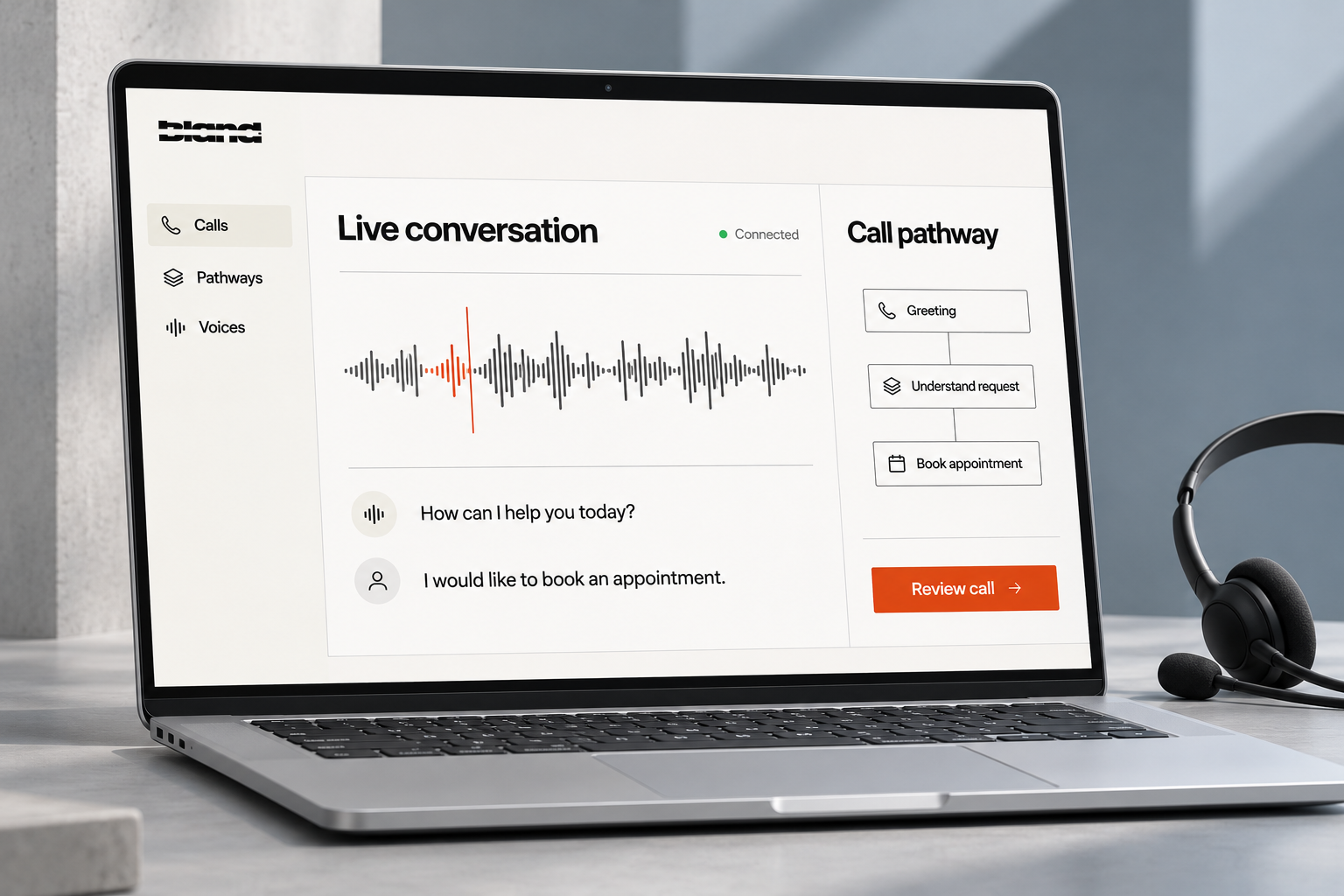
Bland AI: Bringing automation to customer calls
Conversational AI, connected to a production delivery workflow.
AI Agent ● AngularJS ● AWS ● Node.js
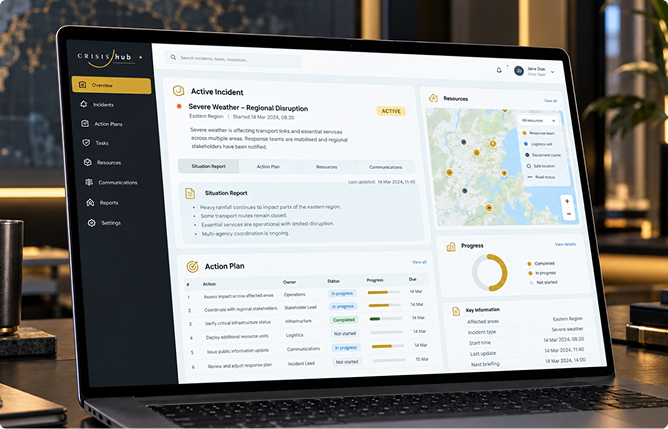
CrisisHub: Turning crisis plans into coordinated action
From planning the response to tracking its execution.
AngularJS ● AWS ● Node.js ● PostgreSQL
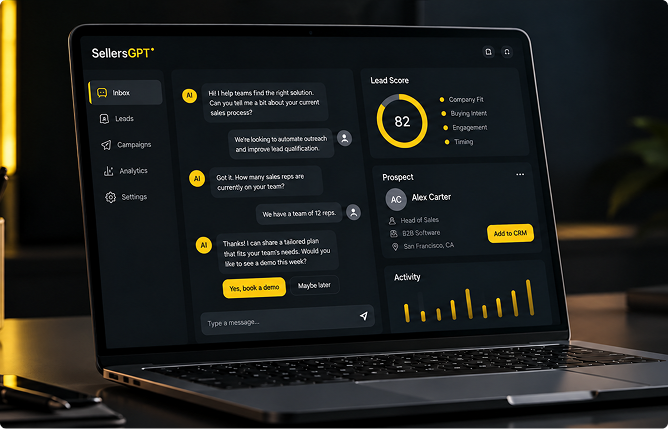
SellersGPT: Turning sales conversations into qualified opportunities
Automated lead qualification through natural conversations
AI Agent ● RAG ● SaaS Development
FAQ
Which blockchain networks do you support?
We primarily develop for Ethereum, Polygon, and EVM-compatible networks. For enterprise use cases, we also work with permissioned frameworks. Network selection depends on security, transaction volume, cost, liquidity, and ecosystem requirements.
Which smart contract standards do you support?
We work with established standards such as ERC-20, ERC-721, ERC-1155, ERC-4626, and ERC-2981, alongside custom contract interfaces.
Can you build upgradeable smart contracts?
Yes, when the governance and product model justify them. We implement controlled upgrade patterns with permissions and storage-safety checks, and document the trade-offs clearly.
How do you test smart contracts?
We use automated unit and integration tests, edge-case testing, fuzzing, invariants, static analysis, forked-network simulations, and manual review.
Do you optimize contracts for gas costs?
Yes. We review storage layout, calculations, loops, external calls, events, and batching, and balance gas efficiency against code clarity and security.
Does development include a security audit?
Our development process includes security-focused engineering, automated analysis, and manual review. An independent audit can be added for contracts managing significant value or financial activity.
Can you improve or extend existing smart contracts?
In most cases, yes. We assess the current architecture, test coverage, permissions, upgrade model, and dependencies before recommending the right approach.
Who controls the contracts after deployment?
Your organization receives the agreed source code, deployment assets, documentation, and administrative ownership. Multisignature or governance controls can be configured around your operating model.
How is smart contract development priced?
Most engagements start with a specification and architecture phase, typically fixed price. Full contract development and testing runs through a Fixed Price Project or Dedicated Team depending on scope. See our engagement models.
- Related Services
Build Beyond the Contract Layer
Connect your smart contracts to the applications, assets, systems, and assurance required for a complete blockchain product.